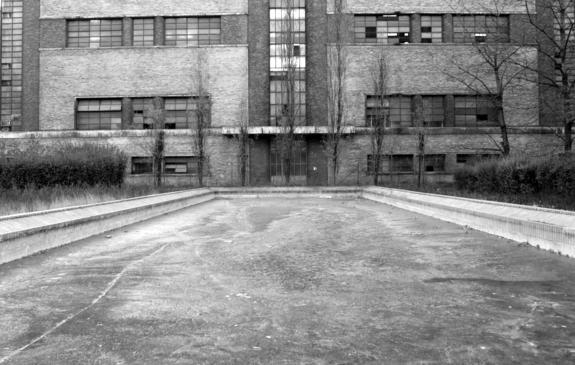
- Activate, Actuate:
- Adam Leech
- Adriana Cavarero
- Adrien Tirtiaux
- Alexander Vaindorf
- ALTERAZIONI VIDEO
- Althea Thauberger
- Anawana Haloba in collaboration with Francesca Grilli
- Anders Kreuger
- Andreas Duscha
- Andreas Müller with David Bennewith
- Andree Korpys and Markus Löffler
- Angela Melitopoulos
- Anna Faroqhi
- Anna Witt
- Anne-Mie Van Kerckhoven
- Ant Hampton
- Arundhati Roy
- Attila Bruni
- Auditory Epode
- Azra Aksamija
- Barbara Visser
- Barbora Klimova
- Bernadette Corporation
- Bernd Ribbeck
- Beth Campbell
- Brave New Alps
- BURGHARD
- Büro für kognitiven urbanismus/Office for cognitive urbanism
- CandidaTV
- Charles Lim Li Yong
- Christian Mayer
- Christian Philipp Müller
- Christoph Ruckhäberle
- Claire Fontaine
- contemporary culture indexBased in San Francisco, US
- Danh Vo
- Daniel Knorr
- Daria Martin
- Darius Ziura
- David Adjaye
- Dayanita Singh
- Deborah Ligorio
- Didier Fiuza Faustino
- Emre Hüner
- etoy.CORPORATION
- Eveli¯na Deicˇmane
- Ewa Partum
- Eyal Sivan
- Eyal Weizman
- Famed
- Francesco Gennari
- Gianluca and Massimiliano De Serio
- Gianni Pettena
- Glen Neath
- Graham Harwood
- Graham Harwood, Richard Wright and Matsuko Yokokoji
- Guido van der Werve
- Hannes Hoelzl
- Hansa Thapliyal
- Harold de Bree
- Heide Hinrichs
- Heidrun Holzfeind
- Hélène Binet
- Hiwa K.
- I. Helen Jilavu
- Igor Eškinja
- Ivana Franke
- Jaime Pitarch
- Janek Simon
- Javier Tellez
- Joachim Koester
- João Maria Gusmão + Pedro Paiva
- Johannes Vogl
- Jorge Otero-Pailos
- Jörgen Svensson
- Jos De Gruyter and Harald Thys
- Josef Strau
- Judi Werthein
- Kamen Stoyanov
- Karl Holmqvist
- KateRˇina Šedá
- Keren Cytter
- Klaus Weber
- Knut Åsdam
- Kristina Bræin
- Latifa Echakhch
- Lawrence Liang
- Libia Castro & Ólafur Ólafsson
- Luca Trevisani
- Luigi Ontani
- m-city
- manifeSTATION
- Marcos Chaves
- Marcus Coates
- Margareth Obexer
- Margrét H. Blöndal
- Martin Pichlmair
- Martino Gamper
- MATTER OF FACT
- Matthew Fuller
- Mazzoni’s Trento Palace: To the Return of Color
- Meg Stuart
- Melati Suryodarmo
- Michał Budny
- Michelangelo Antonioni
- Miklós Erhardt and Little Warsaw
- Miks Mitrevics
- Mladen Dolar
- Mobile Academy, Hannah Hurtzig, Chris Kondek, in collaboration with Karin Harrasser
- Nader Ahriman
- Natascha Sadr Haghighian
- Neil Cummings & Marysia Lewandowska
- Nico Vascellari
- Nikolaus Hirsch & Michel Müller
- Nina Canell
- Omer Fast
- Oskar Dawicki
- Pamela Rosenkranz
- Peter Coffin
- Peter Friedl
- Philippe Rahm
- Philippe Rahm
- Pietro Roccasalva
- Piratbyrån (The Bureau of Piracy)
- Professor Bad Trip (Gianluca Lerici)
- Rä di Martino
- Rabih Mroué
- RADIO PAPESSE
- Ragnar Kjartansson
- Ranu Ghosh
- Reinhard Kropf & Siv Helene Stangeland
- Renée Green
- Ria Pacquée
- Ricardo Jacinto
- Riccardo Previdi
- Roee Rosen
- Rosalind Nashashibi
- Runa Islam
- Rupali Gupte & Prasad Shetty
- Saadi Yousef
- Sanjay Kak
- Saskia Sassen
- Shahid Amin
- Social Art Praxis
- Sonia Leimer
- Stefano Bernardi
- Stephen Willats
- TABULA RASA
- Tamy Ben-Tor
- Tatiana Trouvé
- Teresa Margolles
- TEUFELSgroup
- The Museum for Franco Basaglia
- The Museum of European Normality
- the Museum of Learning Things
- The Museum of projective personality Testing
- the Museum of the Stealing of Souls
- Thomas Meinecke
- Tim Etchells
- Timo Kahlen
- Tom Holert with Claudia Honecker
- Uqbar Foundation
- Valérie Mréjen
- Walter Niedermayr
- Xisco Mensua
- Yane Calovski
- Zilvinas Kempinas
- ZimmerFrei
- __fabrics interseason

artists
Jorge Otero-Pailos
1971, Madrid, es Lives in New York, US
The Ethics of Dust, 2008 Latex, residue from disused wall, 1054 × 1127 × 0.1 cm
BOLZANO/BOZEN
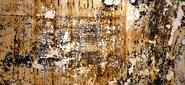
For better or worse, pollution is one of our most important products. If pollution could be preserved, what would it tell us about our social, cultural and industrial past? What sort of ethical questions would a history of pollution raise? Because of pollution’s negative connotations, its effects are indiscriminately removed from our buildings and environment. But these are our best records of airborne pollution. Part of our history is erased when such cleaning takes place.
The Ethics of Dust displays the pollution that was ‘saved’ from a wall inside the ex-Alumix factory in Bolzano / Bozen, which has accumulated dust since the times when it was built during Mussolini’s government. In a two-week performance, Otero-Pailos and his team of architectural conservators scientifically transferred the pollution onto latex casts. Following the tradition of nineteenth-century archeologists, who made plaster casts of the world’s monuments so that European academics could study the architecture of distant cultures, Otero-Pailos suggests a new way of looking at architecture and our history.
Jorge Otero-Pailos is an architect and theorist specialized in experimental forms of preservation. In his projects and writings, preservation becomes a powerful counter-cultural practice that creates alternative futures for our world heritage.
Location
BOLZANO/BOZEN
RAQS MEDIA COLLECTIVE: "THE REST OF NOW"
EX ALUMIX, VIA VOLTA 11, I-39100 BOLZANO/BOZEN, ITALY
more